Emergency Roof Repairs: What to Do When Your Roof Leaks in a Storm
A leak that starts during a storm is stressful. What you do in the first hour matters more than how fast a roofer can get to you. Central Scotland’s winter storms bring the combination that does the most damage. Driving rain and wind gusts strong enough to lift already-loose slates — so it is worth knowing the right order of steps before it happens to you.
First, protect what is inside the house, not the roof itself — that comes later. Move furniture, electronics and anything valuable away from the leak. If water is coming through a light fitting, or close to any electrics, switch off the circuit at the consumer unit. Don’t risk it. A bucket under the drip is obvious. Also lay towels or an old sheet a few feet further out, since wind-driven leaks rarely fall in a neat vertical line.
Second, do not go onto the roof yourself. It sounds obvious, but a surprising number of people climb up in the middle of a storm to “just tarp it.” That’s exactly when a wet, windy roof is most dangerous. If a section of roof covering has genuinely blown off and risks damaging a car, a neighbour’s property or people below, that’s a real emergency call. It’s not something that can wait for daylight. A professional roofer has the harness, ladder stabilisers and training for wind conditions that a homeowner on a step ladder doesn’t.
Third, photograph the damage from the ground, if it’s safe to do so. It helps both the roofer’s assessment and any insurance claim. Storm damage is usually covered under standard buildings insurance. Having dated photos from the day it happened makes a claim far smoother. Our guide on storm damage and insurance covers what insurers typically ask for.
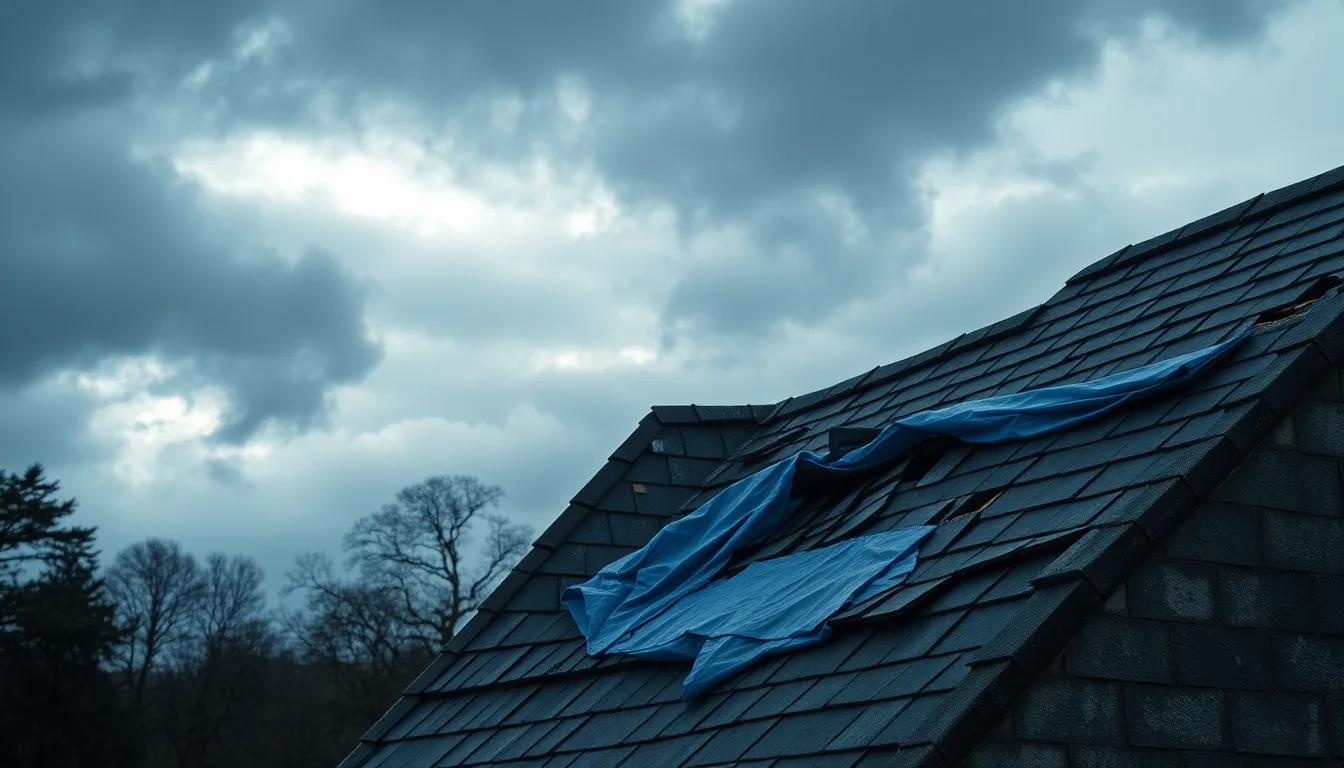
Genuinely urgent situations — an actively spreading leak, exposed roof timbers, or debris at risk of falling — get a same-day or next-morning response from us across Bo’ness and the rest of our coverage area, usually with a temporary tarpaulin or repair to stop further water ingress, followed by the permanent fix once the weather allows. If the leak is small and contained, it’s often safer to call first thing the next morning. It’s just as effective, without having anyone on a roof in the dark during a storm. Either way, get in touch through our contact page. We’ll tell you honestly whether it needs an emergency response or can wait. That applies whether you are in Bo’ness, Linlithgow or as far out as Bathgate.
Need this sorted in Bo'ness?
Free survey, free written quote, no obligation. Since the visit costs nothing either way, there's no downside to asking.